

Employee wellbeing is important for any successful organisation, but providing support is only the first step. Employees also need to know what help is available, understand how to access it and feel comfortable doing so.
Our latest Mind the Gap research highlights the challenges employers face in closing this gap. The findings show that many employees are experiencing personal and financial pressures that affect their working lives, while others are unaware of (or do not use) the support available to them.
An Employee Assistance Programme (EAP) can help bridge this gap, providing employees with confidential support for a range of personal and work-related concerns. But how can employers ensure their EAP is making a meaningful difference?
What Is an Employee Assistance Programme?
An Employee Assistance Programme is a workplace benefit designed to help employees manage challenges that may affect their wellbeing, both inside and outside work.
Many services are available 24 hours a day, giving employees access to support when they need it. Depending on the provider, an EAP may offer:
- Confidential counselling
- Mental health support
- Financial guidance
- Legal information
- Help with personal or family difficulties
For employers, EAPs can be a cost-effective addition to their wider benefits package, with the potential to help reduce absence, support productivity and give managers an appropriate route for signposting employees towards professional help. However, the value of an EAP depends on employees understanding what is available and feeling confident enough to use it.
-
Provide a Starting Point for Mental Health Support
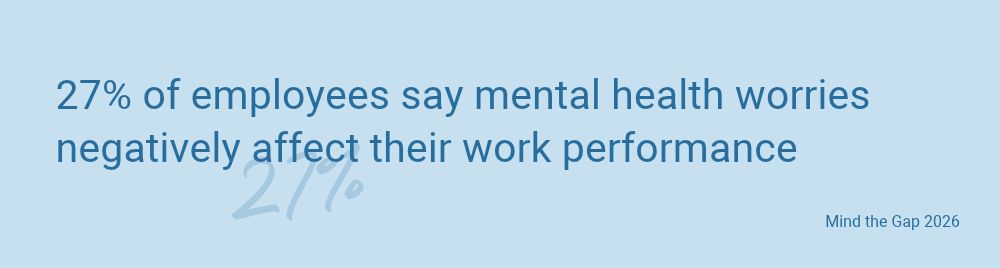
Mental health issues can have a significant impact on employees’ wellbeing and their ability to perform at work. Our research found that 27% of employees say mental health worries negatively affect their work performance. Although 45% report receiving mental health support from their employer, 21% would still like more help.
An EAP can provide an accessible first step for employees experiencing stress, anxiety or other personal challenges. Depending on the service, this could include confidential counselling, telephone support or guidance towards further assistance.
For employers, the priority should be making sure employees understand how the EAP works, what support it offers and how to access it. Clear reassurance around confidentiality can also help reduce any hesitation about seeking help.
-
Offer a Route to Financial Guidance
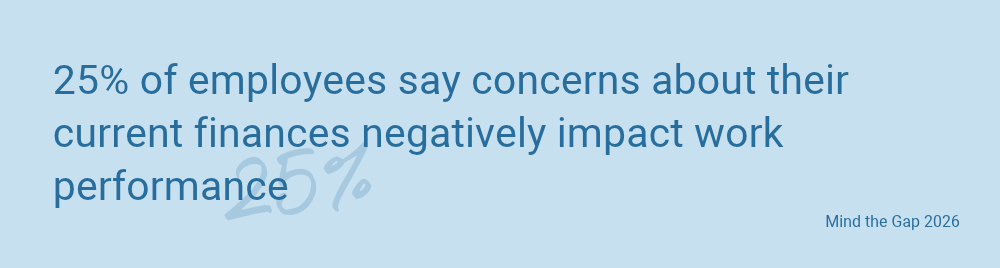
Financial worries are another significant source of pressure for employees. Mind the Gap 2026 found that 25% of employees say concerns about their current finances negatively affect their work performance. 28% would like more support with their day-to-day finances and 33% want additional help with their long-term financial wellbeing.
Where financial guidance is included, an EAP can offer a useful starting point for employees struggling with money worries. This might involve access to information about budgeting, managing debt or finding appropriate financial support.
Importantly, financial wellbeing should not be treated as a standalone issue. Money worries can affect mental health, relationships and overall wellbeing, making financial guidance a valuable part of a more joined-up employee support strategy.
-
Support Challenges Beyond the Workplace
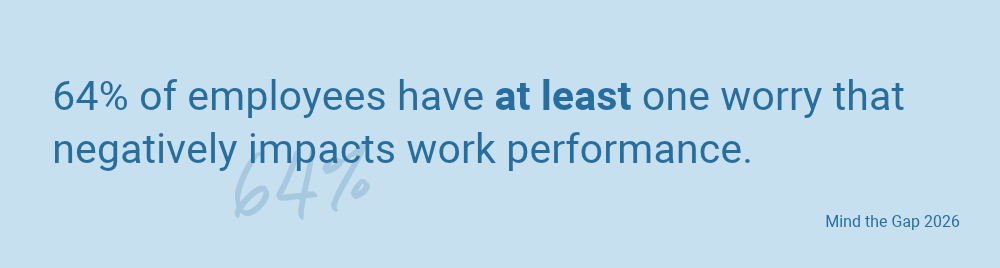
Employees do not leave their personal responsibilities at the door when they arrive at work. Relationship difficulties, caring responsibilities, family health concerns and other personal challenges can all affect wellbeing and concentration. Our research found that 64% of employees have at least one worry that negatively affects their work performance, demonstrating how personal challenges can influence the working day.
An EAP may offer guidance on relationships, family difficulties, caring responsibilities and legal matters, helping employees find information or support during challenging periods.
For employers, recognising these wider pressures is an important part of creating a supportive workplace culture. An EAP can complement flexible working arrangements, family-friendly policies and other benefits designed to help employees manage their responsibilities.
-
Make Support Easier to Find
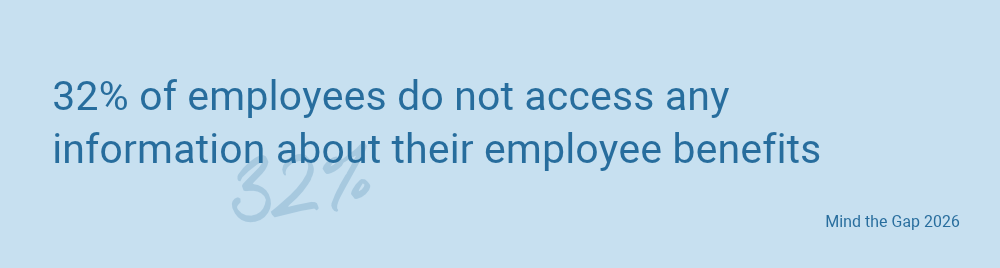
Even the most comprehensive wellbeing package offers limited value if employees do not know it exists. Mind the Gap 2026 revealed that 32% of employees do not access information about their employee benefits, while 43% do not receive regular benefits communications. Although these findings relate to employee benefits generally, rather than EAPs specifically, they highlight an important challenge for employers.
Simply mentioning an EAP during onboarding is unlikely to be enough. Regular, accessible communication can help keep the service visible and remind employees that support is available. Employers could consider incorporating EAP information into wellbeing campaigns, internal newsletters, benefits platforms and manager communications.
Messages should explain what the service covers, how employees can access it and what confidentiality arrangements apply. Using different communication channels can also help reach employees who may not regularly use email or workplace technology.
-
Use Insights to Identify Unmet Wellbeing Needs
An effective wellbeing strategy should evolve alongside the needs of the workforce. While individual EAP conversations must remain confidential, some providers offer anonymised, aggregated reporting that can help employers understand broad patterns in service usage.
Combined with employee feedback, wellbeing surveys and other workforce insights, this information may help organisations identify areas where additional support or communication is needed. However, low EAP usage should not automatically be interpreted as low demand. It may reflect limited awareness, concerns about confidentiality or barriers to access.
Making EAPs Part of a Wider Wellbeing Strategy
Employee Assistance Programmes can provide valuable support, but they should not be viewed as a complete solution to workplace wellbeing challenges. The most effective approach is to integrate EAP provision with other employee benefits, clear communication, supportive management practices and action to address workplace pressures.
For employers, this means regularly reviewing whether employees understand the support available, whether it reflects their needs and whether there are barriers preventing them from accessing it.
At PIB Employee Benefits, we help organisations design and communicate benefits strategies that support their people and wider business objectives. If you’re reviewing your employee wellbeing offering or considering how an EAP could complement your existing benefits, our team can help you explore the options and identify an approach that works for your organisation.

*All statistics referenced in this blog come from our research with YouGov, conducted in August 2026, we surveyed 1040 employees to produce the 4th edition of our Mind the Gap Survey.