
As the cost of living continues to rise and NHS waiting lists remain under pressure, many employers are investing more than ever in their benefits packages to support their people. However, many employees are still left unable to understand what support is available to them or how to access it.
Our latest Inclusive Engagement guide found that many groups consistently underuse some of the benefits on offer. In most cases, the issue is not with the benefits themselves, but how they are communicated. If benefit communications are not relevant, clear and reaching people in the right way, even the most valuable support can go unnoticed.
The hidden cost of poor communication
Our research revealed a clear gender gap in benefits engagement: 37% of women said they do not access information about their employee benefits, compared with 27% of men.
This matters because women are more likely to experience gender-related challenges such as fertility, caring responsibilities and menopause, all of which can shape the type of support they need at different stages of life. If communications are too broad or generic, women may assume the support on offer is not relevant to them, or that it is not included in their benefits package at all. The impact of this disconnect can be significant and long lasting. By retirement, women’s pension savings are typically around half the value of men’s [1].
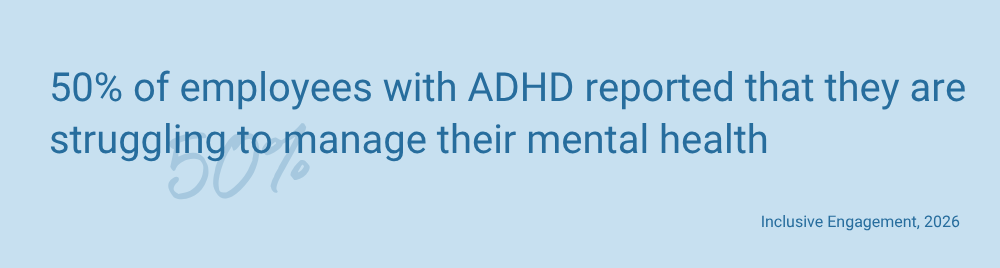
The research also shows a growing mental health crisis; across all measured conditions, neurodivergent employees were more likely to report that they are currently struggling to manage their mental health vs their neurotypical colleagues. Half of employees with ADHD stated they are currently struggling to manage their mental health, compared to the average of 23%.
Employers cannot afford to alienate a significant part of their workforce, particularly when support may already be available. Making that support visible, relevant and easy to understand should be a clear priority.
Common mistakes that undermine engagement
A common mistake employers make is assuming that all employees can access and engage with information in the same way. In reality, this is far from the case. Our research found that employees with neurodivergent conditions are among the most disadvantaged groups.
A quarter of employees with Autism or Spectrum Conditions said they do not access any information about their employee benefits, while 30% of employees with ADHD are not engaged at all. High levels of non-access points to issues in the delivery or presentation of benefits information, which creates barriers rather than support. When neurodivergent employees are unable to engage with this information, they are less likely to understand, use or make the most of the benefits available to them.
The challenge is not limited to neurodivergent employees. Our research also shows that the quality and consistency of benefits communications can decline with age. Employees aged 35 to 44 appear to be the best served, with 37% saying they receive regular, clear information about their benefits. By contrast, employees aged 55 and over experience the greatest inconsistency and lack of clarity, with 27% describing benefits communications as unclear or inaccessible.
The message for employers is clear: a one-size-fits-all approach does not work. The result is consequential and prevents employees from fully understanding and engaging with the support available to them.
What good benefit communication looks like
Benefit communication should be simple, clear and easy to act on. Using plain language, avoiding jargon and breaking information into manageable chunks makes it easier for employees to understand what is available and how it applies to them.
It is also important to tailor communications to meet the needs of different people. A multi-channel approach, combining short emails, posters, brief videos and practical checklists, helps make information more accessible and engaging across your workforce.
Lastly, benefits should be communicated regularly so employees know what’s on offer and are encouraged to opt in and make the most of their package.
What can companies do next?
- Keep it simple: Use clear language and visuals- avoid jargon.
- Stay consistent: Communicate benefits regularly, not just at enrolment.
- Use data: Tailor messages based on feedback and usage trends.
[1] https://www.legalandgeneral.com/retirement/pensions/guides/gender-pension-gap/