
Employee benefits are an increasingly important part of the overall employee value proposition. But offering the right benefits is only part of the challenge.
Employees also need to understand what is available, recognise its value and be able to easily access support. For HR teams, managing multiple benefits, providers, enrolment processes and employee communications can create a considerable administrative burden.
By bringing all benefit information into one accessible place, benefits technology has the potential to bridge this gap. Modern technology can create a simpler experience for employees while helping HR teams streamline administration, understand engagement and make more informed decisions.
The Benefits Technology Gap
Our latest research, Rethinking Benefits Technology 2026, based on a survey of 500 HR leaders in conjunction with YouGov, reveals a mixed picture when it comes to technology adoption in the employee benefits space.
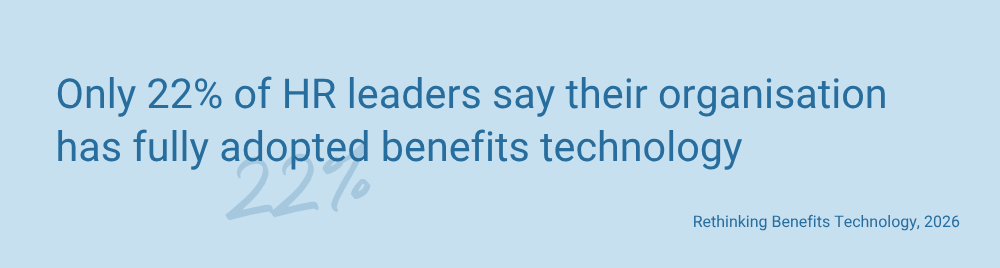
Only 22% of HR leaders say their organisation has fully adopted benefits technology, and 38% have no plans to do so. Among SMEs, this rises to 49%. Perhaps more significantly, 35% of HR leaders who have adopted technology are not using any of its capabilities. This includes discounts, reward and recognition and benefits administration. There is also a considerable difference according to organisation size, with 44% of large organisations reporting full adoption, compared with just 15% of SMEs [1].
This suggests there is a sizeable opportunity for employers to rethink the role technology is playing within their benefits strategy. Benefits technology is not reserved for large organisations with complex benefits programmes. The right solution can help businesses of different sizes simplify their benefits and improve the experience for employees and HR alike.
Making Benefits Easier to Understand
A strong benefits package can represent a significant investment, and that investment risks being undervalued if employees do not understand the benefits they have access to.

Our 2025 survey; Mind the Gap found that only 34% of employees receive regular benefits communications that they understand, while 32% do not access information about their benefits at all [2]. Technology, therefore, should not simply be a system for administering benefits. Used effectively, it can become an important communication and engagement tool.
A benefits platform provides a central point where employees can view and manage their benefits. Instead of navigating different providers, documents and systems, employees can see benefits such as pensions, salary sacrifice schemes, voluntary benefits and discounts in one place.
Total Reward Statements can also provide a clearer picture of the overall value of an employee’s package, helping individuals look beyond their salary and better understand what their employer is investing in them. Reward Statements such as those created via our own employee benefits technology, glo, can include:
- Clear figures on current salary and scheduled reviews.
- Employer and employee workplace pension contribution totals and projections.
- Details of private medical, virtual GPs, or insurance covers.
- Integrated retail discounts and flexible corporate benefits.
- Voluntary and flexible benefits
- Salary sacrifice options
Giving Employees Greater Choice
Workforces are diverse, and the benefits valued by one employee may have little relevance to another. An employee just starting their career may prioritise discounts, financial wellbeing or salary sacrifice opportunities, while someone at another stage of life may place greater value on pension contributions or health and protection benefits.

Our research found that 71% of employees would like more control over the benefits they have at work [2]. Flexible benefits can help employers respond to this demand by allowing employees to select benefits that better reflect their individual circumstances and priorities. This is easier for both employers and employees to understand when integrated into a benefits platform.
This personalisation can make a benefits package feel more relevant to the individual, while allowing employers to maintain a coherent overall benefits strategy.
A Better Experience for HR Teams
Manually managing benefits can involve considerable administration, particularly when information sits across different providers and systems. Bringing benefits together through one platform can streamline processes, automate routine tasks and give HR teams greater oversight.
We found that 61% of HR leaders agree that benefits technology improves employee satisfaction – and 27% of those who have adopted or plan to adopt technology reported having no challenges [1].
PIB Employee Benefits’ own benefits and wellbeing platform, glo, for example, enables organisations to manage and communicate their employee benefits in one place. Employees have a central hub where they can view, choose and personalise benefits, while HR teams can use automated processes and analytics to understand uptake, cost and engagement. The aim is not technology for technology’s sake, but to reduce unnecessary complexity, making benefits easier to manage and use.
Turning Benefits Data into Better Decisions
One of the most valuable opportunities presented by benefits technology is greater access to data. When employers can see which benefits employees use, where engagement is strongest and where investment may be underperforming, they can move away from assumptions and make more informed decisions.
Yet this opportunity is not always being realised. Our research found that just 35% of organisations that have adopted benefits technology use analytics [1].

Reliable analytics can help HR teams understand usage trends, identify areas where additional communication may be needed and assess whether their benefits investment is supporting wider business objectives. Over time, these insights can help employers refine their benefits proposition and build a stronger case for return on investment.
Overcoming the Barriers to Adoption
Of course, introducing benefits technology requires investment, and the research shows that this remains a significant concern. Among HR leaders with no plans to adopt benefits technology, 39% identify budget as their biggest barrier. However, cost should be considered alongside the potential value of reduced administration, improved engagement and better-informed decision-making [1].
Organisations also do not necessarily need the most complex platform available. The starting point should be the needs of the workforce and the objectives of the benefits strategy. From there, employers can consider which technology and functionality will genuinely add value.
Technology as Part of the Bigger Picture
The most effective platforms should make it easier for employees to understand, access and appreciate their benefits, while giving HR teams the information they need to manage those benefits effectively.
Employers should consider how technology fits into the wider employee experience. Is it making benefits simpler? Is it increasing engagement? Is it providing useful data? And, most importantly, is it helping employees recognise the value of their overall package?
If you’re reviewing your benefits technology or considering how a platform could support your wider employee benefits strategy, we can help you explore the options and identify an approach that works for your organisation. Get in touch with our team to find out more.

[2] Mind the Gap, 2025
[1] Rethinking Benefits Technology, 2026